
The new job titles AI is generating for adland
Less ‘you’re fired’ talk, more ‘you’re hired’. What new roles has AI crafted for agencies?
On the face of it, AI has been coming for the copywriter, the junior strategist and the entire art department, not to mention many more roles as its capabilities grow. But deep down we all know that generative AI has largely helped commoditise basic creative tasks within agency land. Straightforward copy, research, designs and videos no longer come at such a high cost of time and money. The technology, often labelled as a kind of soulless averaging machine, has just made exceptional work the new baseline.
It is also creating new and improved job roles, genuinely reshaping the industry as we know it. Globally, across all sectors AI will displace 92 million roles by 2030, but it will also create 170 million new ones, according to the World Economic Forum’s Future of Jobs Report. This is a net gain of 78 million. Within adland, new jobs are being created and filled across agency structures at a rate that would have seemed admittedly sci-fi five years ago.
As Jules Love, AI coach and founder of Spark AI, writes in his agency-focused book Shift, when the world got access to digital cameras and Photoshop, photography and design did not become worthless.
“The industry exploded. There are more photographers, designers and filmmakers working today than ever before… Al is going to do the same thing for your industry."
So, putting the fear-factor to one side, it seems that a more useful question for the industry right now is not just ‘what jobs are being diminished?’ but ‘what jobs are being built?’ We asked the industry’s finest experts.
Emotional Strategist

If AI is flattening content into a kind of hyper-efficient average, someone needs to protect the emotional edge.
Rich Barker, co-founder of Run Deep (a fan-focused agency that’s part of the Mother Family), points to sport as a useful test case for this. It is one of the few spaces that resists full automation, not because AI can’t produce apt content, but because fans do not want perfection.
“Sport is fundamentally resistant to full automation by AI because of what fans actually demand… the chaos, the unpredictability and the human drama.”
That tension creates a new kind of role. “If AI is optimising fan content delivery, someone has to calibrate what emotional register that content should hit,” Barker says. “This calibration is qualitative, territorial, and shifting constantly. The calibration is human.”
You could call it an “Emotional Strategist.” A person who is part cultural analyst, part creative conscience, responsible for ensuring AI outputs do not just perform, but actually resonate.

Rich Barker, Co-Founder, Run Deep
Rich Barker, Co-Founder, Run Deep
Capability Architect

Some of the most important roles in the AI era are less visible and more structural.
Brandon Kaplan, COO at McCann New York, describes a growing need for what he calls a “Capability Architect”: someone tasked with redesigning entire disciplines around AI.
“The job is to unpack a discipline (creative, strategy, project management, production), work with the function leads, and rebuild key workflows and role definitions around what humans uniquely do well versus where AI legitimately can unlock value.”
For Kaplan, this role is directly related to one of the core misunderstandings of AI. “It isn’t a replacement technology, it’s a redistribution one, redefining where the human effort goes, not whether it’s needed.”
Without this work, agencies fall into familiar traps like “tooling without role redesign,” or worse, “irresponsible headcount decisions made on uninformed assumptions about how AI works.”
This role may not be permanent, but it is necessary. As Kaplan puts it, someone must do “the hard, function-by-function work of redrawing the lines.”

Brandon Kaplan, COO, McCann New York
Brandon Kaplan, COO, McCann New York
AI Product & Partnerships Director
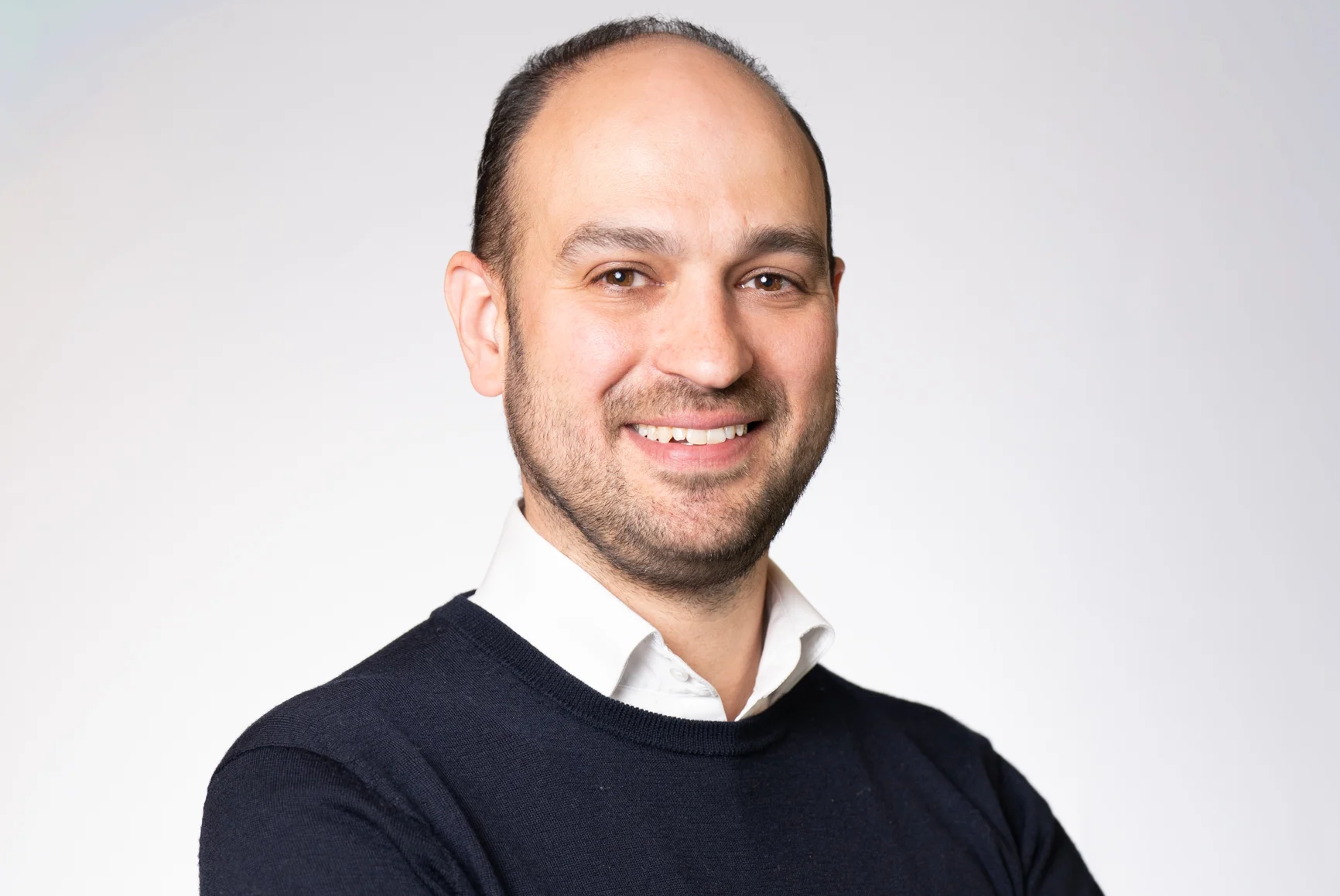
At Havas Market, AI is already reshaping leadership roles.
The agency has introduced an “AI Product & Partnerships Director”, a role responsible for “the buy, build and partner decisions behind every client deployment.”
As Alex Walker, Managing Director at Havas Market, explains, this is about ownership as much as innovation, embedding AI into the commercial and operational core of the agency, not treating it as an add-on.

Alex Walker, Managing Director, Havas Market
Alex Walker, Managing Director, Havas Market
The SEO/GEO Specialist

Even established functions are being rewritten.
At Havas Market, SEO has evolved into a combined SEO/GEO discipline, with specialists focused on Generative Engine Optimisation - a phrase reshaping traditional search at the moment.
As Alex Walker, Managing Director at Havas Market, puts it, this reflects a shift where “LLM-led discovery becomes a measurable revenue channel.”
As more and more consumers use AI platforms to discover products, search is no longer just about rankings, it is about how AI interprets, surfaces and recommends brands.
This shift is also creating a wider measurement problem that sits beyond SEO itself. Gracie Page-Fozzati, Global Senior Marketing Director at UnboundIA, believes this is forcing a rethink of how performance is understood across the entire funnel.
“Zero-click buyer journeys mean the traditional analytics stack is no longer telling marketers the whole picture,” she says.
What agencies need now are analysts with “a deep, working understanding of how LLMs actually determine what makes a brand recommendable.”
Their role will not simply be reporting performance, but “re-architecting the way measurement is done” for a world where discovery increasingly happens inside AI interfaces rather than through clicks and search rankings.

Gracie Page-Fozzati, Global Senior Marketing Director, UnboundIA
Gracie Page-Fozzati, Global Senior Marketing Director, UnboundIA
Dedicated AI Operating System Specialists
At Havas, teams are being built around Converged.AI, an internal operating system that “fuses data, planning, activation and creative production into a single client-facing stack.”
This reflects a broader shift away from fragmented tools towards integrated systems, where AI is not a tool used occasionally, but the infrastructure work runs on.
Agentic Workflow Architects
Looking ahead, Walker believes the biggest shift in agencies will be from AI users to AI builders, with agency staff resembling orchestrators of AI systems as much as creators of campaigns.
A rise in “Agentic Workflow Architects” is expected. These are people who “design the ways in which teams of AI agents collaborate across media, measurement and reporting.”
This would entail less prompting of tools and more designing entire systems of work.
Page-Fozzati sees this evolving even further into what she describes as a future “Head of Growth Architecture” or “Head of Operations Architecture” role sitting at leadership level.
“It isn't traditional operations, strategy, or growth,” she explains. “It's across all three.”
The remit would be to build “the infrastructure that a modern, dynamic agency actually runs work on” as workflows become increasingly orchestrated and agentic.
At UnboundIA, this is already influencing hiring decisions. Page-Fozzati says the company recently hired “a data scientist with deep knowledge of LLM architecture” specifically to help scale its proprietary systems and agentic workflows.
“We're betting the future of the agency on building infrastructure that leverages the power of LLMs while empowering our human talent to do their best work,” she adds.
AI Quality Leads
As output scales, so does the risk. Havas and Walker anticipate “AI Quality Leads” becoming essential - roles responsible for “human oversight, prompt governance and brand safety in generative outputs.”
In a world of infinite content, judgement has and will become a vital resource.
Commerce AI Strategists
Commerce is another frontier being reshaped, with the industry shifting from targeting audiences to simulating and anticipating them.
Walker points to the emergence of “Commerce AI Strategists”, those who “pair retail media expertise with synthetic audience modelling and predictive decisioning.”
Rewriting the job descriptions we already have
For all the new titles emerging, there is a deeper shift underneath them. Kaplan argues that the real question is not what roles are being added but how existing ones are changing.
“The industry is fixated on additions to the org chart… The deeper, less glamorous work is rewriting the job descriptions we already have.”
Kaplan uses the strategy role as an example. “Desk research, competitive audits, category mapping… work that used to consume the front half… now happens in hours.” What that buys back is time for what actually matters like “developing, pressure-testing and refining genuine insight.” It also changes the strategist’s role entirely. “Strategy moves from the team that hands over a brief to the team that stays in the room.”
This is where Spark AI and Jules Love’s Shift also becomes a useful lens. Rather than imagining AI as creating entirely new departments, Love frames it as embedding new responsibilities within existing roles, what he calls “jobs within jobs.”
In practice, that looks less like hiring a standalone AI team and more like building a distributed system of ownership across the agency.
At the top sits an AI Sponsor, typically a founder, MD or CEO, who “champions AI adoption… secures resources, provides strategic direction and ensures AI initiatives align with the goals of the business.” Crucially, they have the authority to remove roadblocks.
Alongside them is an AI Lead: the programme driver. Not necessarily a technical expert, but someone “action-oriented,” able to build a plan and make it stick across the organisation.
Then comes the Technical Lead, the hands-on operator. “Not a coding genius,” as Love puts it, but someone comfortable enough with AI to evaluate tools, build assistants and ensure data is AI-ready.
And beyond those roles, the model spreads horizontally: “representatives from different functions… creative, strategy, client services.”
Page-Fozzati strongly agrees with this idea that AI cannot become siloed into its own department or specialist corner of the business.
“The role I won't be hiring for is the ‘agent manager’,” she says. “Every manager must learn to manage agents alongside humans.”
For her, creating a dedicated role to simply “own” AI agents risks repeating mistakes agencies made with previous emerging technologies. “Hiring a dedicated role to ‘own’ the agents just others the technology,” she argues.
“AI isn't a department, and treating it like one will be fatal for the agencies that do.”
This reflects a broader shift in leadership expectations across agencies.

Anne Stagg, CEO of Digitas UK, sees this as part of a wider rise in what she calls “intelligent creative leadership.”
According to Stagg, agencies increasingly need leaders who can combine “creative craft with a deep understanding of generative tools, workflows and quality control” at a moment where AI adoption is accelerating faster than people’s ability to use it effectively.
The role of AI in creativity is not experimentation for experimentation’s sake, Stagg feels. “It’s less about experimentation for its own sake and more about ensuring AI is used to raise creative standards, not dilute them.”
That, she argues, requires a new layer of expertise and, in some cases, entirely new leadership roles. The agencies that succeed will ultimately be “the ones that treat AI as part of the job, not a separate function.”
This reflects a broader shift in how AI is operating inside agencies: less as a standalone capability, and more as an operating system embedded across disciplines.
The modern creative, strategist or producer is not being replaced, they are being redefined. As Love puts it, the future belongs to “people who think like artists but understand technology well enough to coax magic from machines.”
The title might stay the same, but the shape of the work underneath it is already changing.

Anne Stagg, CEO, Digitas UK
Anne Stagg, CEO, Digitas UK
Conclusion: The next hire
So yes, new roles are emerging across agencies. But the bigger shift is this: the most valuable hires will not fit neatly into any one title at all.
The Spark AI Agencies Report (Spring 2026) backs this up. 65% of agency leaders now prioritise aptitude over specific technical AI skills when recruiting. In a landscape moving this fast, the ability to learn, adapt and apply matters more than mastery of any one tool.
But aptitude alone is not enough. As the report warns, “the curiosity and drive that made someone a strong hire can stall just as quickly if the structures to support them are not in place.”
Forward-thinking agencies are already reflecting this, with some creative job descriptions now listing “experience using AI tools for prototyping” alongside traditional craft skills. AI literacy is becoming foundational.
At the same time, the most valuable hires are not purely technical. In Shift, Love describes them as “Creative Technologists,” people who can bridge imagination and machine capability.
“Your next hire isn’t a designer or a copywriter,” he argues. “It’s someone who can help you build AI into the way you design and write.”
The job titles might be multiplying, but the idea of a fixed role is breaking down entirely.
 Built with Shorthand