
How has AI impacted
the brief?
A high quality brief has always been a vital part of the agency/client relationship. But has AI helped or hindered crafting one?
How has AI impacted
the brief?
A high quality brief has always been a vital part of the agency/client relationship. But has AI helped or hindered crafting one?
Effective work starts with a high quality brief. It is a key document and a key part of a strong and growing agency-client relationship. Yet, there is still an ever-present disconnect between what agencies perceive to be a clear, decisive and most importantly inspiring brief, and what clients end up handing over.
This is what most agencies believe to be true and what brief consultancy outfit BetterBriefs has proven. Before mainstream generative AI hit the markets, in 2021 BetterBriefs found that 75% of agencies and 33% of marketers did not rate the quality of the last three marketing briefs they were involved in, 80% of agencies believed marketers had a poor understanding of what agencies need from briefs, and 60% of marketers admitted to using the creative process to clarify strategy. Despite all these damning stats, 89% of marketers and 86% of agencies agreed on the fact that “you can’t get good creative work without a good brief.”
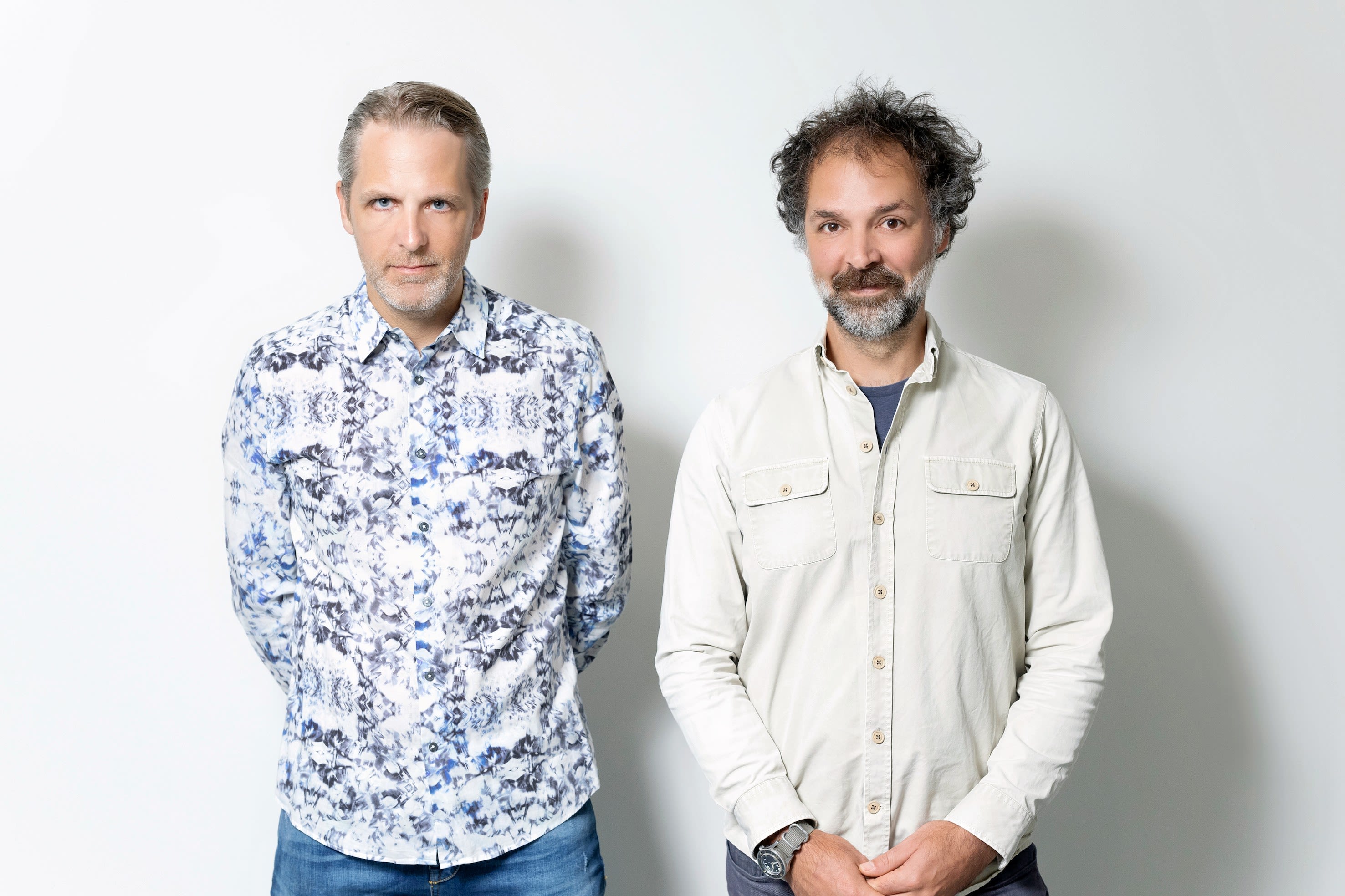
Matt Davies and Pieter-Paul von Weiler
BetterBriefs
Ex-agency strategists Matt Davies and Pieter-Paul von Weiler founded BetterBriefs over a pint of Guinness and a chat over what was troubling them. What was troubling Davies that night, ended up being the final drop.
“I had a really poor one-line brief on my desk from a stock-listed company. They’d gone to the trouble of opening Word and writing: ‘We’ve never advertised, it’s the company’s 75th birthday and we now think it’s a good time to make our brand famous.’ Full stop. Save, send.”
Since then, out of a heap of frustration, the pair have decided to passionately fight for better marketing briefs, analysing thousands of them in a bid to help marketers craft documents that are decisive and exciting for agencies to receive, and to enable them to see the brief as a crucial moment in commercial creativity.

“A great brief is one that sets clear direction,” von Weiler says. “It’s where the creative process starts and the most important and most difficult part to get right is depicting the picture of success. Agencies and marketers are about to go into a chaotic, beautiful and wild creative process and they need to know what they want to achieve together. It’s really hard to nail and it’s missing in so many briefs. If the marketer isn’t clear, then the agency isn’t clear, and it sets off a whole circle of uncertainty.”
The best, most creative and effective work is created in true partnership, von Weiler and Davies believe, “where the two parties are doing different things and there’s some friction.” Yet in most situations, BetterBriefs has found that the relationship ends up being one that likens ‘pass the parcel.’
In 2007, agencies and clients went through an average of three rounds of rework to get to a final creative idea. 19 years on, the average is up to five. “And that doesn’t mean that the quality of the work is getting better,” Davies adds. “The industry is spending more time to get to worse work.”
So, other than training marketers to improve the quality of their briefs, feedback and idea assessment, how can a tool like generative AI maybe help short circuit this agency-client fragmentation? While Davies and von Weiler were in London for a big client engagement, (training hundreds of marketers how to write better briefs for agencies, we caught up with them both to find out.
It can help inform decisions, but not make them for you
“Let’s start with the good bits,” von Weiler endeavoured to say. It is no secret that now more than ever brands are inundated with data, and generative AI can help cut through it all. “When writing a brief you’re looking for relationships and AI can help find these relationships, providing another level of data-crunching that helps set a sharper brief and a sharper picture of success.” It is for this reason that AI can help inform the decisions that need to be made by marketers when forming a brief.
The tech can also act as a provocation and research starting point with regards to getting closer to understanding a brand’s audience. Davies added:
“We are often not the target audience that we are designing communications for, so AI is one method of getting a snapshot of who these people are and what they're into.
Davies and von Weiler admit that they are jealous that they did not have access to the technology when they were junior strategists. “It would have been incredible,” Davies says. “The accessibility and speed at which you can now understand whether what I’m developing is genuinely different and powerful is phenomenal.”
The brief is an important tool designed to create ideas that break patterns, shift behaviour and challenge conventions, and what the pair find fascinating is AI’s ability to help you identify those conventions. “You can ask: What’s the status quo in this category?,” von Weiler says. “And then ask it to make the worst campaign - and then do the opposite yourself.
However, while Davies acknowledges its research power, he draws attention to an important distinction: AI cannot make decisions - it can help inform them.
BetterBriefs itself has built its own AI brief tool that works as a coach. “It asks questions like: where might you find the answer to this? Have you tested that relationship in your brief?” Davies adds. “It’s an example of how AI can help, but it would be wrong to think that it can make decisions for the marketer who knows the business best.”
Both Davies and von Weiler have tested AI’s brief-writing ability for themselves. Ultimately, they have found that the clear decisions and choices that need to be made in a brief are not clear in the strategy AI has come up with.
It doesn’t have the human intuition to help create better work and relationships… yet
Real care needs to be taken to ensure that something like analysing the target audience, a key part of crafting the brief, is not entirely led by AI. An increasing number of industry professionals are using AI to better understand people, von Weiler says. “But the beauty in being a marketer or strategist is going deep, asking why again and again, until you reach something more interesting about how people relate to a product or brand.”
“AI just isn’t deep enough yet. It tends to take a more rational path. It doesn’t have the human intuition to keep asking those deeper ‘why’ questions. And that’s what helps shape a meaningful understanding of the audience and what you’re trying to achieve. How well you understand the people you’re speaking to, the message in the brief, the reason and belief you’re giving creatives - it’s all rooted in human understanding.”
As well as affecting human relationships with regards to understanding audiences, AI is also impacting the human relationship between client and agency. Von Weiler feels the briefing - the exciting, dramatic and interrogative moment of transfer - is under pressure. “The face to face moments are being compressed,” he says. “The industry is prioritising speed and automation and the time put into real human understanding is getting a bit lost.”
“Marketing is all about understanding people. This is especially true for marketers and their agencies. I think that understanding is going backwards a little. It starts with not being in the same room anymore - there’s less visibility of body language. In a briefing presentation, you can see whether someone truly understands or whether they are just saying they do. That subtle human reading is being lost and I’m not sure automation helps that.”
AI systems are also enabling a tick-box workflow where work is becoming more of a production of factory assets, von Weiler admits, as opposed to a curated process for creativity and thinking. “The brief and the project become a sequence of stages: tick, tick, tick.”
A falter in the client-agency relationship is also causing clients to question the nature of AI usage. “The technology is widely used, but not universally used yet,” Davies points out. “So some clients who aren’t entirely up to scratch are sceptical as to whether AI is taking over the creative process and whether they’re getting the best possible depth and thinking from agency work. They may be thinking: ”are we getting better, deeper output - or just faster output?”
Could AI increase the disconnect between client and agency?
BetterBriefs was founded on the fact that there is a “massive disconnect” between what agencies think a good brief is and what marketers actually deliver. “If that disconnect already exists, I’m not sure AI helps,” von Weiler says. “There’s a real chance it increases the gap.”
According to Davies, some agencies are using AI to sense-check bad briefs, using the tech to offer impartial pushback. “They’re using AI to say: ‘This isn’t just our opinion - this is what AI’s analysis says.’” Davies sees this as a cop-out. “Strong relationships have a culture of challenge. Both sides question each other and work through things together.” Von Weiler agrees: “As a professional,you should be able to argue about why a brief isn’t ready to start the creative process. You don’t need AI for that.”
The pair both feel that for marketers to focus on the actual writing process, to produce higher quality briefs and thus form stronger relationships with agencies, there is a strong case for avoiding AI.
“We’ve just trained a marketing team, and they’re now confident enough to defend their briefs,” Davies says. “If they just throw their work into AI, they’re no better equipped to brief, translate or bring the agency with them. They’re better off crafting the brief themselves - so that they can defend it, sell it and present it properly.”
“If AI becomes a shortcut - rushing to meet a deadline, needing something fast - it’s a false economy. You end up with something that doesn’t do the job because you’ve prioritised speed.”
Brief writing is a skill, for both sides of the marketing table. “But with AI the skill can risk being left behind in favour of efficiency,” von Weiler admits.
The future of the brief in an
AI-dominated world
The day AI has a deep enough understanding of the irrationality of human decision-making, is the day the balance shifts and it starts making decisions for humans. But for now, Von Weiler jokes, “we’re just using it to make difficult things simpler. Human understanding is the key to writing briefs.”
Davies is optimistic that in maybe two or three years’ time the AI-obsessed industry will have become so consistent in crafting briefs and ideas that chaos will be re-embraced.
“We’ll realise creativity can’t flourish inside too much structure or control,” he adds. “Maybe we’ll get more creative, more chaotic, more out there in our thinking.”
Von Weiler left us with this sentiment: “If you look at what an idea is, simply putting two things together that haven’t been put together before - it’s irrational. AI is all about logic, structure and efficiency, but our industry is about creativity and human understanding - putting things together that haven’t been put together before - that’s where the tension between AI and creative excellence will always sit.”
 Built with Shorthand